
Understanding Burnout as a Physiological State.
Burnout is often misunderstood as a personal failure or a lack of resolve. This misunderstanding creates unnecessary shame and disconnects us from what is truly happening in the body. Burnout is not a character deficit. It is a physiological state that develops when the nervous system has been operating in mobilization for extended periods without sufficient recovery.
When you begin to understand burnout as a state of chronic activation, you shift from self-criticism to curiosity. The body is offering accurate information about its limits, needs, and current capacity. This understanding opens the door to meaningful recovery.
The Three-Dimensional Experience of Burnout.
How Burnout Manifests in the Body and Mind
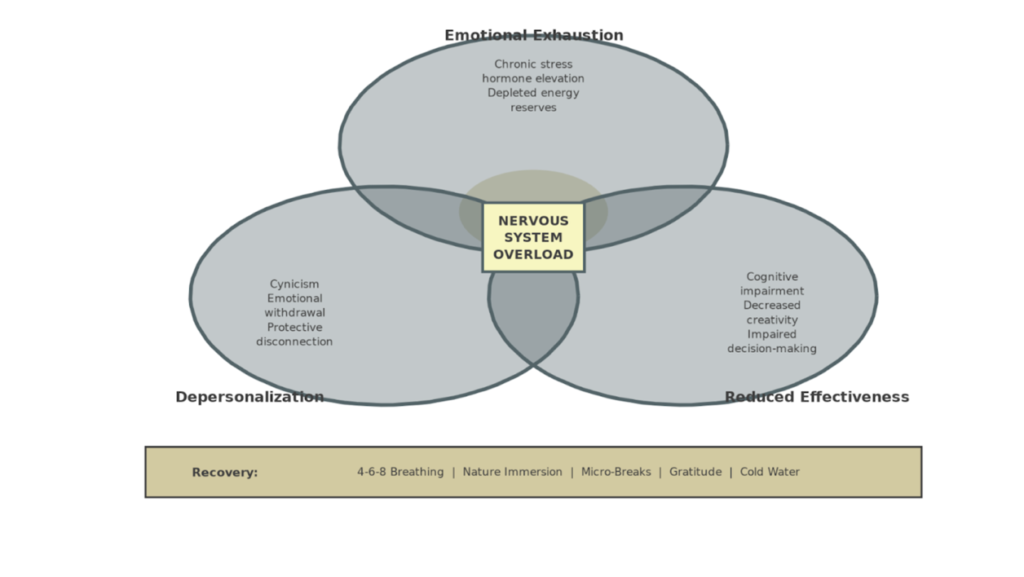
The World Health Organization identifies three core components of burnout. Each reflects a distinct aspect of nervous system dysregulation.
Emotional Exhaustion
This is more than feeling tired. Emotional exhaustion develops when stress hormones remain elevated for long enough that the system can no longer return to baseline. You may feel depleted even after rest. This is the body’s signal that recovery pathways have been overextended.
Mental Distance and Withdrawal
You may notice irritability, cynicism, or a sense of emotional detachment. These reactions often emerge when the system attempts to conserve energy during prolonged stress. The nervous system reduces engagement as a protective strategy, not because a person has stopped caring.
Reduced Cognitive Capacity
Tasks that once felt manageable may require more effort. Decision-making may slow, and creativity may feel less accessible. This occurs because chronic stress shifts blood flow toward survival-oriented structures in the brain, leaving fewer resources for complex thinking. The brain is functioning differently under sustained demand.
Why Burnout Is a Nervous System Condition
The nervous system alternates between activation (mobilization) and recovery (restoration). Burnout develops when this natural oscillation becomes disrupted. Persistent sympathetic activation keeps the body in a state of vigilance, altering hormonal, immune, and cognitive processes.
Over time, this can lead to:
- Reactivity due to heightened amygdala activity
- Reduced executive function as the prefrontal cortex receives less support
- Immune changes, including periods of suppression and later inflammation
- Sleep disruption, making recovery more difficult
- Memory challenges linked to strain on the hippocampus
These shifts are not flaws. They are predictable physiological responses to prolonged demand.
How Burnout Accumulates Over Time
Burnout rarely appears after a single stressor. It develops gradually as the system receives more input than it can integrate. Many people describe it as “creeping up on them,” which reflects the slow accumulation of unprocessed stress.
Early signs often include:
- Difficulty being present with others
- Irritability or reduced patience
- Persistent muscular tension
- Foggy thinking
- A sense of emotional flatness
- Resistance to starting tasks
These signals are the nervous system’s way of indicating that its resources are becoming strained.
Supporting Recovery Through Regulation Practices
Vacations and rest can be helpful, but recovery from burnout often requires intentional practices that activate the parasympathetic nervous system. These techniques help the body shift out of chronic mobilization and into restoration.
4-6-8 Breathing
Inhaling, pausing, and lengthening the exhale communicates safety to the vagus nerve. This supports a shift toward physiological calm and improves heart rate variability.
Time in Nature
Natural environments reduce stress markers and increase parasympathetic activity. Even brief periods outdoors can support recalibration.
Posture Reset
Opening the chest, lifting the gaze, and lengthening the spine can influence emotional tone and cognitive function by signaling stability and availability.
Short, Frequent Breaks
Pausing briefly throughout the day prevents the buildup of stress load and allows the system to reset.
Gratitude Reflection
Focusing on specific moments of appreciation helps redirect attention toward resources and safety signals within the nervous system.
Cold Water Exposure
Engaging the diving reflex through cool water can create an immediate shift into parasympathetic activity.
Addressing Systemic Contributors
While individual practices are helpful, recovery is more sustainable when environmental factors are also examined. Burnout often reflects chronic demands that exceed available resources. Changes such as clearer expectations, healthier boundaries, supportive relationships, and reduced decision load can lower stress input and support long-term resilience.
Psychological safety within teams and communities plays a significant role in physiological regulation. Supportive environments decrease cortisol levels and enhance adaptability.
A Path Toward Recalibration
Burnout indicates that the nervous system has been asked to operate beyond its capacity. Recovery requires both compassion for your current state and practices that intentionally activate restoration pathways.
The nervous system has a remarkable ability to reorganize when given consistent cues of safety, support, and spaciousness. Through steady and intentional practices, the system can regain flexibility, energy, and clarity.
Burnout is a physiological adaptation to prolonged demand. With understanding and care, the body can find its way back toward balance.