The Science of Connection in the Body
Experiences of love, safety, and genuine connection create measurable changes in the body. These states influence the nervous system, hormone balance, cardiovascular function, and immune regulation. The set of shifts that occur when a person feels deeply connected can be described as a “love response”: a coordinated pattern of physiological changes that supports rest, repair, and healing.
During this response, heart rate, blood pressure, and respiratory rate often decrease. The parasympathetic nervous system—the branch associated with “rest and digest”—becomes more active. Stress chemistry quiets, and the body moves toward a state that supports resilience and recovery.
Brain imaging studies show that both maternal love and romantic love activate reward circuitry in the brain, including the ventral tegmental area (VTA), which is involved in dopamine signaling. These patterns suggest that love engages evolutionarily conserved pathways that influence motivation, bonding, and wellbeing. Love is experienced emotionally, but it is also a biological event.
How Connection Shifts the Nervous System
The autonomic nervous system includes two primary branches:
- The sympathetic system, which mobilizes the body for challenge.
- The parasympathetic system, which supports rest, digestion, and repair.
Many people spend extended periods in sympathetic activation due to ongoing stress. Experiences of felt safety and connection help the system shift toward parasympathetic activity.
When a person feels safe with another human being—through presence, care, or understanding—the vagus nerve transmits signals that support calming and regulation. Heart rate variability may improve, breathing often becomes slower and deeper, and muscular tension can ease. The immune system receives cues that the environment is less threatening and can allocate resources toward protection and repair rather than constant defense.
Oxytocin, sometimes referred to as a bonding hormone, increases with nurturing touch, warm connection, and emotional closeness. Oxytocin can reduce cortisol levels, support cardiovascular health, and influence immune function. In this way, connection changes not only how we feel, but also how our biology organizes itself.
Hormonal Cascades and Heart Protection
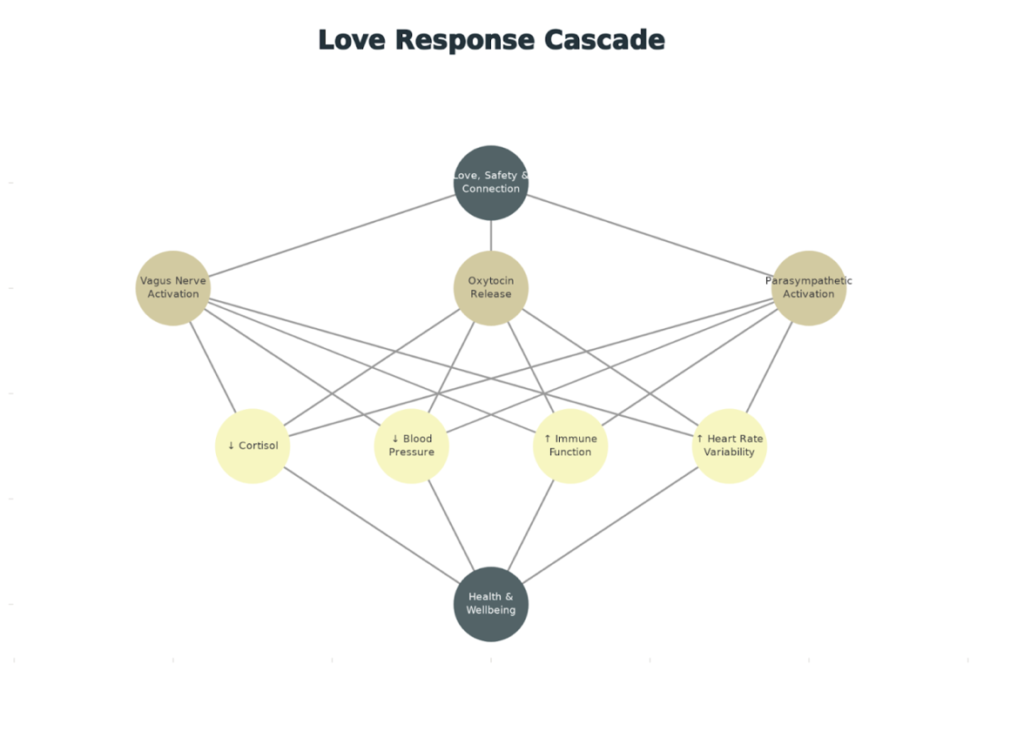
The hypothalamic–pituitary–adrenal (HPA) axis is a central stress-regulation system in the body. Chronic activation of this axis can contribute to elevated cortisol, increased inflammation, and strain on the cardiovascular system. Supportive, loving relationships have been associated with healthier HPA axis responses and more balanced stress hormone patterns.
Research has shown that individuals in stable, caring relationships often exhibit:
- Lower baseline cortisol
- Better heart rate variability
- Reduced inflammatory markers
These findings suggest that connection can ease the physiological burden on the cardiovascular system.
Touch combined with emotional connection can also modulate emotional brain activity. In some studies, the presence or hand-holding of a trusted partner has been associated with reduced activation in brain regions involved in emotional pain and threat processing. This indicates that supportive touch can function as a form of biological co-regulation.
Connection and Immune System Regulation
The immune system responds continuously to signals from the nervous system and emotional state. Experiences of love, safety, and connection send cues that can enhance immune coordination.
Studies have linked positive emotional states and loving-kindness practices with:
- Increased activity of natural killer cells
- Improved responsiveness of helper T cells
- Changes in antibody production
- Reductions in certain inflammatory markers
These shifts appear to involve multiple pathways, including:
- Increased parasympathetic activation
- Improved vagal tone
- Reduced chronic elevation of stress hormones
In a state of felt connection, the body often behaves more like an organism oriented toward healing, growth, and long-term protection.
Relationships and Health Outcomes
A growing body of research associates strong, supportive relationships with better health outcomes across many domains. People with stable, nurturing connections frequently show:
- Lower rates of cardiovascular disease
- Reduced risk of stroke and certain infections
- Faster recovery from illness and surgery
- Increased longevity
Conversely, chronic loneliness and ongoing relationship conflict have been linked with increased inflammation, heightened sympathetic activation, and higher risk for various health conditions. The body interprets social isolation and unresolved relational stress as potential threats, and physiology adjusts accordingly.
These patterns underscore an important reality: relationships and health are deeply intertwined, both emotionally and biologically.
Practices That Support the Love Response
While meaningful relationships cannot be reduced to techniques, certain practices can help create conditions that invite more safety, connection, and regulation in the system.
Conscious Connection Spending a few minutes each day in undistracted presence with someone you care about—without devices, with full attention—can support oxytocin release, vagal activation, and emotional attunement.
Hand-over-Heart Practice Placing a hand over the heart and taking several slow breaths while bringing to mind a person, place, or memory associated with warmth or gratitude can send powerful safety signals through the nervous system.
Loving-Kindness Meditation Gently directing phrases of kindness toward oneself and others has been associated with shifts in emotional state, immune markers, and overall wellbeing. This practice reinforces internal experiences of care and connection, even in the absence of others.
Supportive Touch Safe, welcomed touch such as hugging, holding hands, or embracing a loved one or pet can activate oxytocin pathways. Even brief periods of nurturing touch can influence nervous system regulation.
Compassionate Inner Dialogue The way we speak to ourselves internally matters. A kinder, more supportive inner voice can function as an internal source of co-regulation. Over time, this can help the body feel safer and more supported from within.
An Invitation to Engage Love as Biology
The nervous system, cardiovascular system, and immune system all respond to experiences of connection. Love and safety are not only meaningful emotionally; they are also deeply relevant to physical health.
Each moment of genuine presence, compassion, and care communicates to the body that it is less alone, less threatened, and more supported. Over time, these signals can help reorient the system toward flexibility, resilience, and healing.
Cultivating love—for others and for oneself—is not only a relational intention. It is also a biological practice that can shape how the body functions and how life is experienced.