The human nervous system holds remarkable power, a biological superhighway that can transform stress from a destructive force into a catalyst for resilience. At the heart of this transformation lies the vagus nerve, the longest cranial nerve that connects brain to body in ways neuroscientists are only beginning to understand. Recent research reveals that simple, repeatable micro-habits lasting just minutes can measurably strengthen vagal tone and, with it, our capacity to thrive under pressure. Rather than requiring dramatic lifestyle overhauls, these evidence-based interventions work with our natural biology to build what I call as “unstoppable resilience”, the ability to not just survive stress, but use it as fuel for growth and adaptation.

The Vagus Nerve: Your Body’s Built-In Resilience System
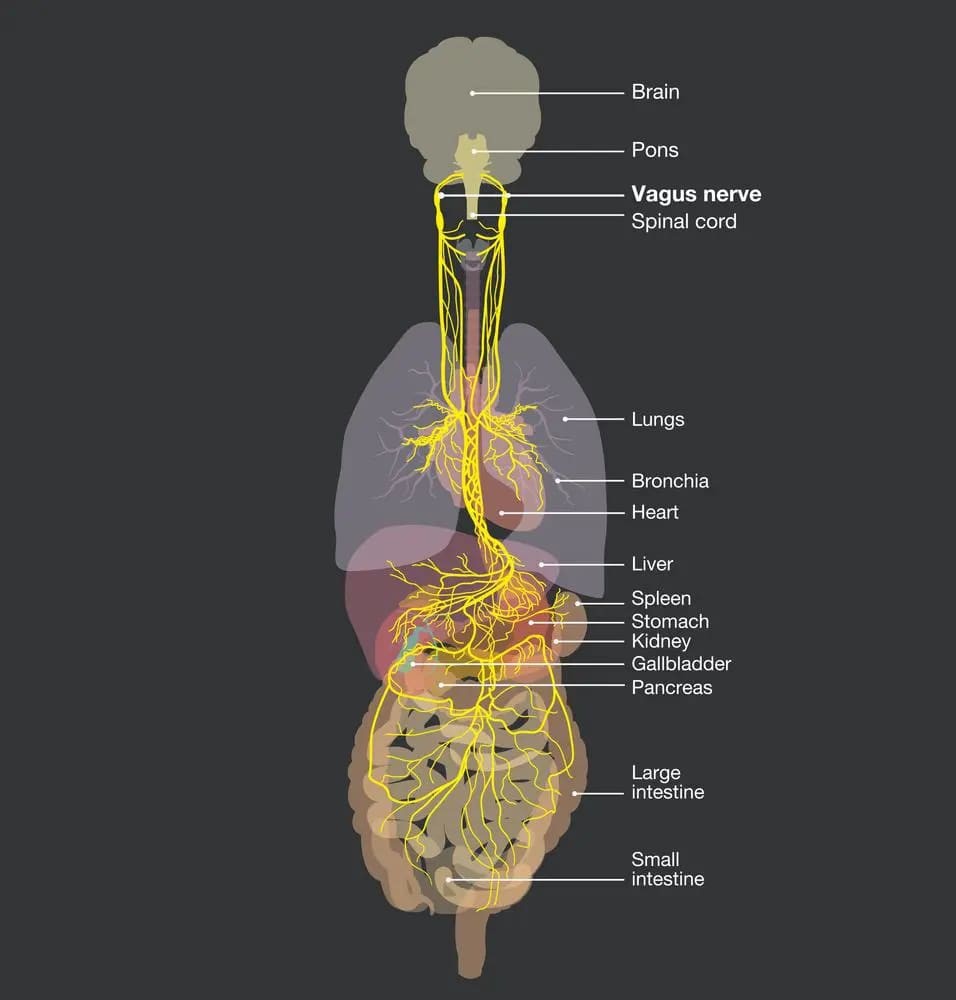
The vagus nerve represents far more than a simple anatomical structure. This complex neural pathway originates in the brainstem and extends throughout the chest and abdomen, regulating heart rate, digestion, immune responses, and the body’s inflammatory cascade. Neuroscientist Stephen Porges’ groundbreaking Polyvagal Theory reveals that this nerve system actually consists of two distinct branches: an ancient dorsal pathway shared with reptiles, and a uniquely mammalian ventral pathway that enables social connection and rapid stress recovery.
Vagal tone—the measure of how well this nerve functions—serves as a biomarker for resilience itself. Individuals with higher vagal tone demonstrate superior emotional regulation, faster recovery from stressors, and enhanced capacity for social engagement. Heart rate variability (HRV), the variation in time between heartbeats, provides the most accessible measurement of vagal function. Higher HRV correlates with better stress resilience, emotional flexibility, and overall health outcomes.
What makes this particularly relevant for modern stress management is that vagal tone is remarkably trainable. Unlike fixed personality traits, this biological resilience system responds rapidly to targeted interventions. Research demonstrates measurable improvements in vagal function within days of implementing specific practices.
The Science Behind Micro-Habits and Neuroplasticity
The concept of micro-habits—tiny, repeatable actions requiring minimal willpower—aligns perfectly with how the nervous system learns and adapts. Dr. Eva Selhub’s clinical work demonstrates that overwhelming the system with major changes often triggers defensive responses, while small, consistent actions can rewire neural pathways without resistance.
Neuroplasticity research confirms this approach. The brain strengthens neural circuits through repetition, not intensity. A 60-second breathing exercise performed consistently creates more lasting change than sporadic 30-minute meditation sessions. This occurs because micro-habits activate what neuroscientists call the “minimum effective dose”—the smallest intervention that produces measurable results.
Studies on habit formation reveal that micro-habits become automatic within 18-254 days, with simpler behaviors requiring less time. This automaticity is crucial because it removes the decision fatigue that often derails larger behavior changes. When vagal training becomes as automatic as brushing teeth, it provides consistent nervous system support regardless of external circumstances.
The compound effect amplifies these small actions over time. Research by James Clear and others demonstrates how 1% improvements accumulate into dramatic transformations. In the context of vagal training, daily micro-habits don’t just provide momentary relief—they progressively strengthen the entire stress response system.
Extended-Exhale Breathing: The Foundation Practice
Among vagal training techniques, extended-exhale breathing stands as the most researched and accessible intervention. This practice leverages the direct connection between the vagus nerve and respiratory centers in the brainstem. When exhalation extends beyond inhalation, it activates the parasympathetic branch of the autonomic nervous system, promoting what researchers call the “rest and digest” response.
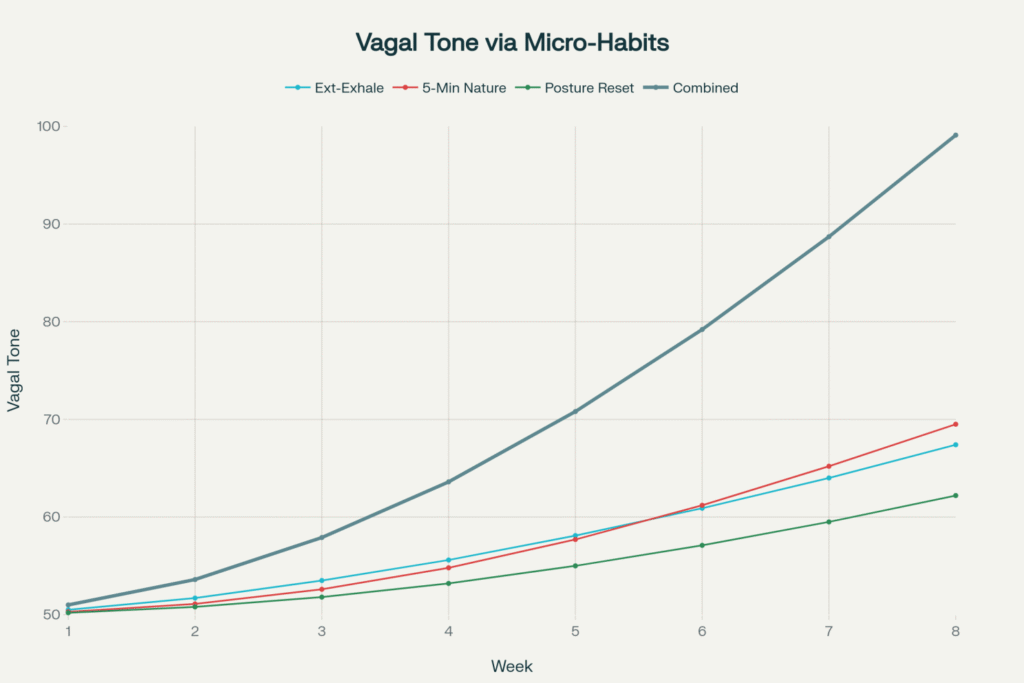
The optimal breathing ratio for vagal stimulation involves inhaling for 4 counts and exhaling for 6-8 counts. This specific pattern maximizes vagal nerve stimulation while remaining simple enough for daily implementation. Studies show that even three minutes of this breathing pattern can increase heart rate variability by 15-20%, indicating improved vagal tone.
The 4-6-8 Breath Protocol represents a progressive approach Dr. Selhub uses with executive clients. Participants begin with 4 counts in, 6 counts out for one week, then progress to 4 counts in, 8 counts out as comfort increases. The key insight is that the exhale duration matters more than the inhale—longer exhalations send stronger signals to the vagus nerve that safety has been restored.
Clinical applications show remarkable results. Healthcare workers practicing extended-exhale breathing during shifts reported 40% less perceived stress and maintained more stable emotional regulation during high-pressure situations. The technique’s effectiveness stems from its ability to interrupt the sympathetic “fight-or-flight” cascade while actively strengthening parasympathetic recovery.
Five-Minute Nature Breaks: Microdosing Natural Resilience
Exposure to natural environments provides one of the most potent yet underutilized tools for vagal enhancement. Research consistently demonstrates that brief nature exposure reduces cortisol levels, lowers blood pressure, and increases vagal activity. What makes this particularly relevant for busy professionals is that these benefits manifest within minutes, not hours.
A landmark study by Largo-Wight revealed that office workers taking 10-15 minute outdoor breaks experienced significant stress reduction compared to indoor breaks. The mechanism involves multiple pathways: natural light regulates circadian rhythms, green spaces reduce mental fatigue, and outdoor environments activate what attention restoration theory calls “soft fascination”—a gentle form of attention that allows the prefrontal cortex to recover.
The Five-Minute Protocol developed through Dr. Selhub’s corporate wellness programs involves stepping outside during natural transition points—before meetings, during phone calls, or between tasks. Participants don’t need wilderness access; even urban environments with trees, sky, or water features provide measurable benefits. The key is intentional attention to natural elements rather than passive outdoor time.
Physiological measurements confirm nature’s vagal effects. Studies show 27% reductions in cortisol levels after brief nature exposure, alongside measurable improvements in heart rate variability. These changes occur rapidly—within 3-5 minutes of focused nature contact. For individuals unable to go outdoors, even window views of natural scenes provide measurable stress reduction.
Corporate implementations reveal practical applications. Technology companies incorporating “outdoor walking meetings” report improved problem-solving, enhanced creativity, and reduced employee burnout. The practice requires no special equipment or extensive time commitment, making it sustainable even in high-pressure work environments.
Mindful Posture Resets: The Overlooked Vagal Connector
The relationship between posture and vagal tone represents a fascinating intersection of ancient wisdom and modern neuroscience. Research reveals that body position directly influences autonomic nervous system function through mechanoreceptors and proprioceptive feedback loops. Poor posture—particularly the forward head position common in computer work—compresses vagal nerve pathways and reduces parasympathetic activation.
Postural vagal resets involve brief realignments that optimize nerve pathway function. The core technique includes rolling shoulders back, lengthening the spine, and opening the chest while taking three deep breaths. This 60-90 second intervention can improve vagal efficiency by up to 12% when performed every two hours throughout the workday.
Dr. Selhub’s clinical observations reveal that executives practicing posture resets report enhanced mental clarity, reduced neck tension, and improved emotional regulation during challenging conversations. The mechanism involves both mechanical and neurological factors: optimal alignment reduces physical stress on nerve pathways while the conscious attention required for reset activates mindfulness pathways in the prefrontal cortex.
Advanced applications include “micro-stretching” sequences that target specific areas where the vagus nerve interfaces with musculature. Gentle neck rotations, shoulder blade squeezes, and chest opening movements provide targeted stimulation to vagal nerve branches. Research shows these interventions are particularly effective when combined with conscious breathing, creating a synergistic effect on autonomic balance.
Cold Exposure: Activating the Mammalian Diving Response
Cold water exposure represents one of the most rapid methods for vagal activation, triggering what researchers call the mammalian diving response. This evolutionary adaptation immediately shifts the nervous system into parasympathetic dominance, slowing heart rate and reducing stress hormone production. The beauty of this technique lies in its speed—effects manifest within 30-60 seconds.
The Cold Water Protocol involves splashing cold water on the face, particularly around the eyes and upper cheeks where vagal nerve branches are most accessible. Alternative methods include holding an ice cube against the neck or taking brief cold showers. The temperature differential, not prolonged exposure, provides the therapeutic benefit.
Research demonstrates that brief cold exposure increases heart rate variability by 10-15% within minutes. This occurs through direct stimulation of vagal afferent fibers that signal safety to the brainstem. Healthcare professionals using this technique during high-stress procedures report improved emotional regulation and faster stress recovery.
Dr. Selhub incorporates cold exposure into her “emergency resilience toolkit” for executives facing acute stressors. The technique provides immediate nervous system reset during challenging negotiations, difficult conversations, or overwhelming workloads. Unlike many vagal interventions that require quiet environments, cold exposure works effectively even in busy settings.
The Polyvagal Institute’s 2025 Insights
The October 2025 Polyvagal Institute gathering in Florida highlighted groundbreaking developments in vagal training applications. Dr. Stephen Porges presented new research on “vagal efficiency”—the speed and completeness with which the nervous system shifts between activation and recovery states. This metric provides a more nuanced understanding of resilience than simple vagal tone measurements.
Sonic augmentation technology emerged as a promising frontier, with research showing that specific sound frequencies can enhance vagal nerve stimulation. Early trials suggest that algorithmically filtered music may amplify the effects of traditional vagal exercises, potentially reducing the time required for meaningful results.
The conference also featured presentations on vagal co-regulation—how nervous systems synchronize during social interactions. This research validates the importance of relationship quality in stress resilience while providing practical techniques for enhancing interpersonal vagal support. Healthcare teams and business partnerships implementing co-regulation practices report improved collaboration and reduced collective stress.
Peter Staats, President of the Vagus Nerve Society, presented compelling evidence on bioelectric approaches to vagal enhancement. While medical devices remain specialized tools, his research illuminates the electrical nature of vagal function and supports the effectiveness of non-invasive stimulation techniques.
Dr. Selhub’s Clinical Protocol: The Six Pillars Integration
Through decades of clinical practice, Dr. Eva Selhub has developed an integrated approach that weaves vagal training into what she terms the “Six Pillars of Resilience”. This framework addresses physical, emotional, mental, spiritual, social, and environmental dimensions of well-being, with vagal optimization serving as the foundational element.
The Daily Vagal Rhythm involves strategic micro-habit placement throughout the day. Morning breathing exercises establish baseline vagal tone, midday nature breaks prevent stress accumulation, and evening gratitude practices promote restorative sleep. This rhythm aligns with natural circadian patterns while providing consistent nervous system support.
Case studies from Dr. Selhub’s executive coaching practice demonstrate remarkable outcomes. One technology CEO struggling with chronic stress implemented the complete protocol over 12 weeks. Heart rate variability measurements showed 35% improvement, while subjective stress ratings decreased by 50%. Performance metrics, including decision-making speed and creative problem-solving, showed corresponding improvements.
The Stress Transformation Model represents Dr. Selhub’s synthesis of vagal training with meaning-making practices. Rather than simply managing stress, this approach teaches individuals to use stress as information about values, priorities, and growth opportunities. The vagal training provides the nervous system stability necessary for this transformational work.
Micro-Interventions Research: The 2025 Evidence Base
Recent studies confirm the superiority of micro-interventions over traditional stress management approaches. A 2025 randomized controlled trial involving 210 participants found that smartphone-delivered just-in-time vagal interventions produced greater stress reduction than standard wellness programs. The key insight: timing matters more than duration.
Real-time stress detection using wearable technology enables precision interventions when they’re most needed. Rather than scheduled stress management sessions, participants received vagal exercise prompts during moments of elevated stress. This approach produced 40% greater improvements in stress recovery and emotional regulation.
Workplace applications show particular promise. Studies examining brief nature breaks find that even 3-5 minute outdoor exposures during work hours significantly reduce employee stress and improve job performance. Organizations implementing these “micro-recovery” protocols report decreased absenteeism, improved employee engagement, and enhanced creativity.
The compound effect of micro-habits becomes evident in longitudinal studies. Research tracking participants over six months reveals that individuals practicing daily vagal micro-habits maintain stress resilience even when facing increased life challenges. This suggests that these practices build genuine adaptive capacity rather than providing temporary relief.
Implementation Strategy: Making It Automatic
The transition from knowledge to practice represents the critical challenge in vagal training. Dr. Selhub’s implementation framework focuses on habit stacking—attaching new vagal practices to existing routines. Rather than creating entirely new schedules, successful practitioners integrate micro-habits into established patterns.
Environmental design supports consistency by removing barriers to practice. This might involve setting phone alarms for nature breaks, placing reminder cards near workstations, or downloading breathing apps that provide gentle prompts. The goal is making vagal practices easier to do than to skip.
Progress tracking using heart rate variability measurements provides objective feedback on nervous system improvements. Consumer-grade HRV monitors allow practitioners to observe the relationship between their micro-habits and physiological changes, reinforcing the connection between practice and results.
Community support amplifies individual efforts through social accountability and shared learning. Dr. Selhub’s group programs create environments where participants support each other’s vagal training journey while experiencing the co-regulatory benefits of safe social connection.
The Future of Stress: From Survival to Thriving
As we advance into 2025 and beyond, the relationship between humans and stress continues evolving. Rather than viewing stress as an enemy to be eliminated, emerging research positions optimal stress as essential for growth, creativity, and resilience. The key lies not in stress avoidance, but in developing nervous system capacity to engage with challenge while maintaining access to recovery and social connection.
Vagal training provides the biological foundation for this transformation. By strengthening the nerve pathways that regulate stress response and recovery, individuals develop what researchers term “stress resilience”—the ability to engage fully with life’s challenges while maintaining health, relationships, and performance.
The micro-habit approach makes this transformation accessible regardless of lifestyle constraints or personal circumstances. Whether implemented by busy executives, healthcare workers, students, or caregivers, these evidence-based practices provide a pathway from stress survival to stress mastery.
Dr. Selhub’s vision of “unstoppable resilience” represents more than individual wellness—it points toward a cultural shift where stress becomes a catalyst for individual and collective flourishing. Through training the vagus nerve, we discover that within our own biology lies the key to transforming daily pressure into daily strength, creating not just better stress management, but better lives.
The journey from stress to resilience begins with a single breath, a moment in nature, or a conscious posture adjustment. These micro-habits, supported by decades of neuroscience research and clinical application, offer a practical pathway to nervous system mastery. In a world where stress is inevitable, resilience becomes the skill that determines not just survival, but the capacity to thrive.
Conclusion: The Resilience Revolution
The convergence of ancient wisdom and modern neuroscience reveals a profound truth: resilience is not a fixed trait but a trainable skill. Through targeted micro-habits that strengthen vagal tone, we can literally rewire our nervous systems for greater stress capacity, emotional regulation, and social connection. The research is clear—small, consistent actions produce measurable improvements in both physiological markers and subjective well-being.
As highlighted at the 2025 Polyvagal Institute gathering, we stand at the threshold of a new understanding of human resilience. The tools explored in this article—extended-exhale breathing, nature micro-breaks, posture resets, and cold exposure—represent just the beginning of what’s possible when we align our daily habits with our biological design for thriving under pressure.
Dr. Eva Selhub’s integration of vagal training with comprehensive resilience development offers a roadmap for transforming stress from a destructive force into fuel for growth. The evidence suggests that by training our vagus nerve through deliberate micro-habits, we don’t just manage stress better—we fundamentally alter our relationship with challenge itself, developing what she calls “unstoppable resilience” that serves not only individual well-being but collective human flourishing.